Transcending Boundaries: The Self-Evolution of Economics in the Age of AI

By Derek Doi

Introduction: The Shifting Frontiers of Economic Inquiry

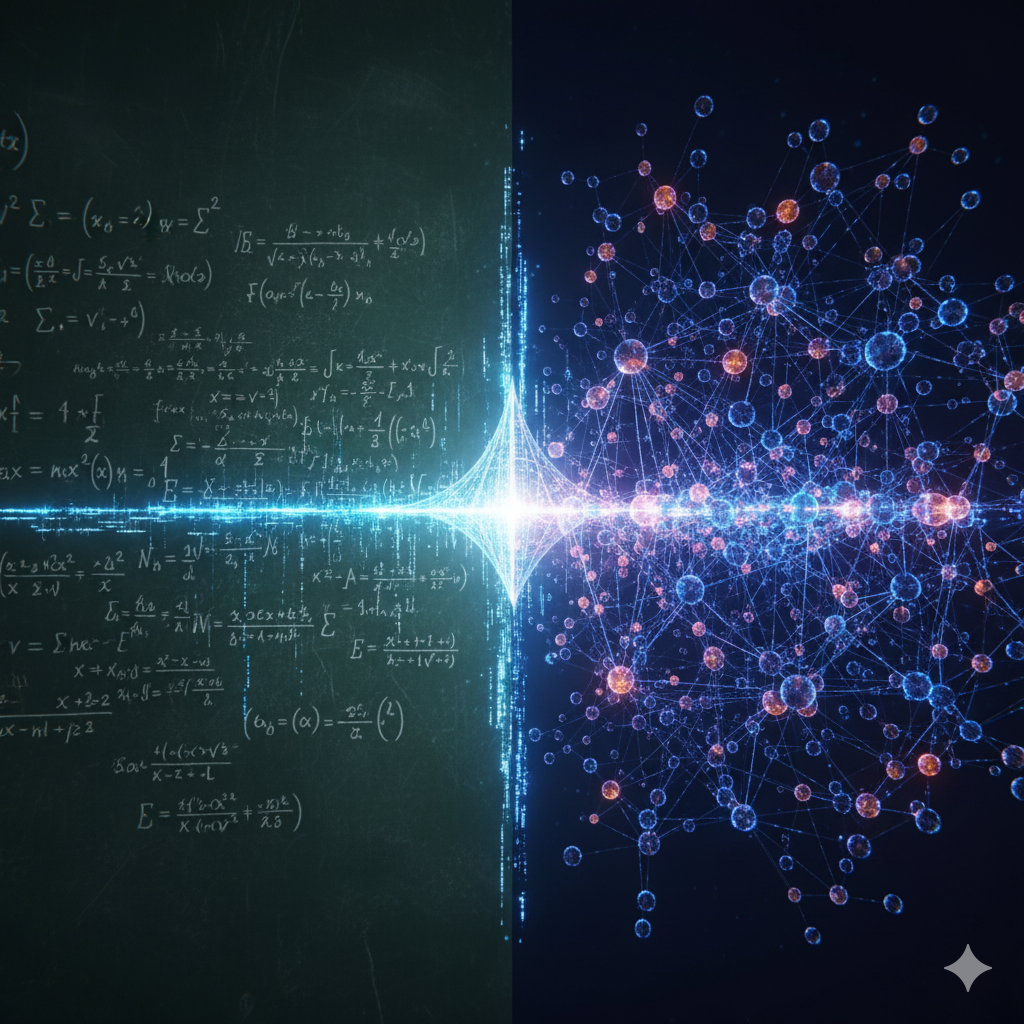
For centuries, economics has been a discipline defined by its methodological sovereignty. It carved out its intellectual territory through elegant mathematical formalisms, foundational axioms of rational choice, and a rigorous focus on markets, prices, and incentives operating within defined equilibria. Its language was that of calculus and differential equations; its laboratories were curated historical datasets and controlled, albeit stylized, thought experiments. While it productively absorbed insights from philosophy, psychology, and sociology, it maintained a distinct epistemological core centered on parsimonious modeling and causal identification.

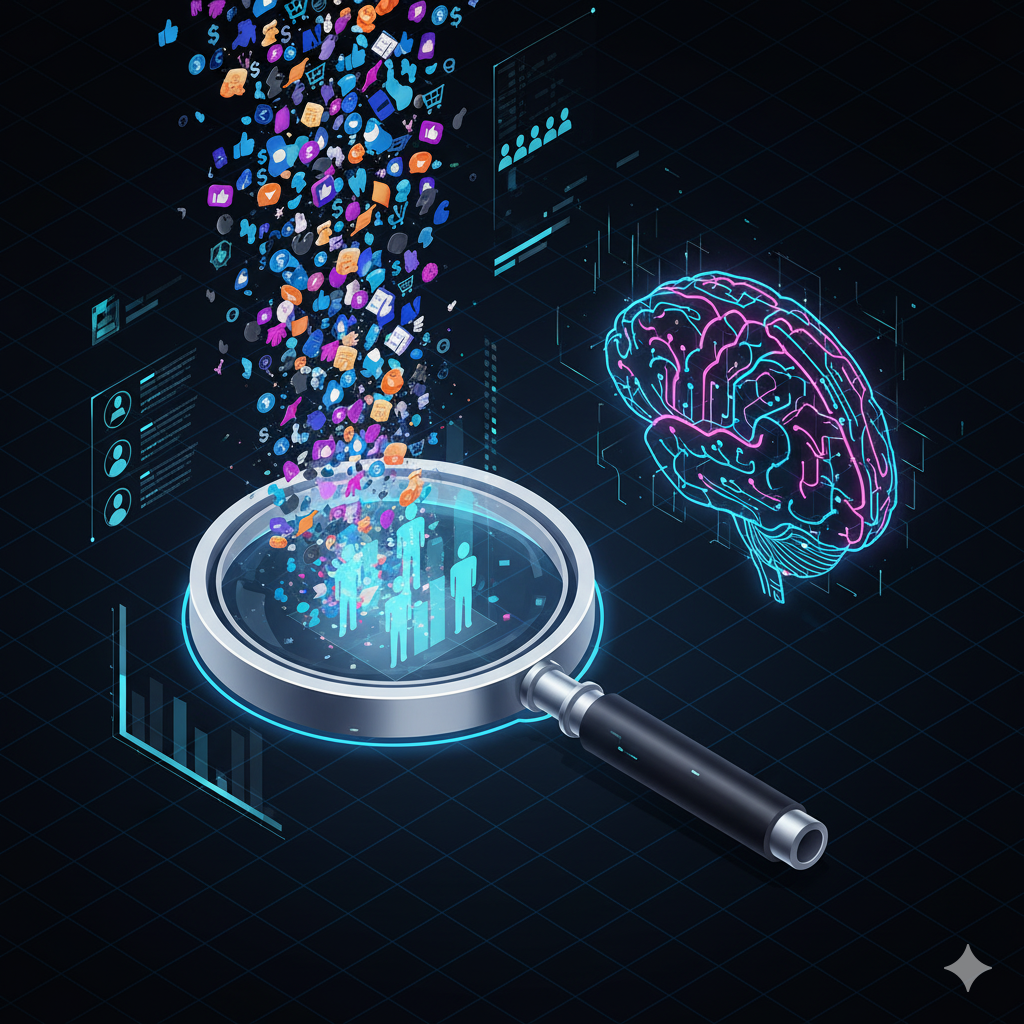
Today, this intellectual edifice is undergoing a profound metamorphosis. The primary catalyst is the rapid and pervasive advancement of artificial intelligence. AI is not merely another computational tool being added to the economist’s toolkit; it represents an active and disruptive agent of disciplinary deconstruction and reconstruction. It compels economics to engage in a radical act of self-evolution by systematically dissolving its traditional methodological and conceptual boundaries, thereby forging a new, dynamic, and interdisciplinary knowledge ecosystem. This evolution is not a passive adaptation but an active re-imagination of what economic science can be, how it is conducted, and what questions it can credibly answer in an increasingly digital, data-saturated, and algorithmically-mediated world.


Part I: The Impulse for Evolution—A Dual Crisis of Explanation and Complexity

1. The Crisis of Explanation: The Digital Economy’s Defiance

1. The Crisis of Explanation: The Digital Economy’s Defiance

The rapid, disruptive rise of the digital economy has created an array of novel phenomena that strain conventional microeconomic and industrial organization models to their breaking point. These new market structures and value mechanisms directly contradict the standard assumptions foundational to classical and neoclassical economics:


The Problem of Value and Price: How does one model competition and determine efficiency when the core product (e.g., a social network, a search engine) is offered for zero monetary price to the consumer? Monetization is often indirect, relying on advertising, or the extraction and commodification of user data and attention. Traditional metrics like price-cost margins and consumer surplus become nebulous, if not meaningless.

Existing theory, developed for an economy of tangible, rival goods, struggles to provide the novel explanatory frameworks required for this digitized context.


2. The Crisis of Complexity: The Economy as an Emergent System

Concurrently, a growing body of work across finance, labor, and macroeconomics posits that the economy is increasingly understood not as a deterministic machine tending toward a single, stable equilibrium, but as a complex adaptive system (CAS).

The traditional reductionist approach of ceteris paribus (all else equal) is fundamentally disabled here. In a complex adaptive system, “all else” is precisely what is in constant, interactive, and non-linear flux. The interconnectedness is the problem.


Part II: The Methodological Revolution—Dissolving the Border with Computer Science

The most significant and porous new frontier is between economics and computer science. This fusion moves far beyond using statistical software packages.

A. From Hypothesis-Testing to Pattern-Discovery with Machine Learning (ML):
Traditional econometrics is fundamentally a hypothesis-testing framework: a theory suggests a relationship, and data is used to test its validity and measure parameters. Supervised and unsupervised machine learning flips this paradigm towards pattern-discovery and prediction. Techniques like random forests, gradient boosting, and deep neural networks excel at identifying complex, high-dimensional relationships within data without strong a priori theoretical guidance.

B. The New Synthesis: Causal Machine Learning
The core mission of economics—disentangling causality from correlation—is being supercharged by a new synthesis. Methods like Double/Debiased Machine Learning (developed by Chernozhukov, Hansen, and others) elegantly combine the strengths of ML and econometrics. ML algorithms (e.g., lasso, random forests) are used to flexibly model and “control for” a vast set of potential confounding variables from high-dimensional data, creating a purified statistical environment where more traditional causal inference techniques (like instrumental variables or difference-in-differences) can operate with greater precision and less risk of specification bias. This represents a genuine methodological breakthrough, blending the predictive power of ML with the causal rigor of econometric theory.

C. The Computational Laboratory: Agent-Based Modeling (ABM)
Perhaps the purest manifestation of the computational turn is the rise of Agent-Based Modeling. ABMs are computational micro-worlds where a population of autonomous, heterogeneous “agents” (programmed representations of consumers, firms, traders, banks) follow relatively simple behavioral rules. They interact with each other and their environment in a simulated space over time. There is no imposing aggregate equilibrium equation; instead, system-wide outcomes—market crashes, boom-bust cycles, the emergence of social norms, wealth distribution patterns—emerge from the bottom-up through these myriad local interactions.

Transformative Potential: ABMs serve as a “wind tunnel” for economic policy. Policymakers can test the potential systemic effects of a new financial regulation, a universal basic income scheme, or a carbon tax in a simulated, artificial economy before real-world implementation. They allow economists to study out-of-equilibrium dynamics, heterogeneity, and complex feedback loops in ways that analytical models cannot. This is economics embracing its identity as a complex systems science.


Part III: Expanding the Intellectual Ecosystem
—Fusions with Cognitive Science and New Subfields

A. The Cognitive Frontier: Hyper-Empirical Behavioral Economics
Behavioral economics chipped away at the rational agent model. AI is turning that chip into a canyon. By analyzing digital exhaust—the trillion data points left by online behavior—economists can move beyond lab experiments and surveys. Continuous, real-world data on click-through rates, attention duration, scrolling patterns, purchase sequences, and social media engagement provides an unprecedented window into revealed preferences, time-inconsistent behavior, social influences, and emotional responses at a societal scale. Furthermore, the development of AI agents themselves provides a novel testbed for economic theory. Designing AIs that must learn to trade, negotiate, form coalitions, or signal credibility forces economists to formalize and stress-test theories of rationality, learning, and strategic interaction in completely new computational environments.

B. The Birth of New Hybrid Subfields
This interdisciplinary convergence is spawning vibrant new areas of research:

Computational Macroeconomics: Researchers are beginning to use large-scale simulations and ML on alternative data (news text, shipping manifests, satellite imagery) to build more responsive, high-frequency models of the entire economy, attempting to better predict turning points, policy multipliers, and the propagation of shocks.

Algorithmic Market Design: Economists now work at the heart of tech companies, co-designing the algorithms that govern online advertising auctions (like Google’s AdWords), ride-sharing platforms (Uber’s surge pricing), and matching markets (for kidneys, medical residencies, school placements). This work merges game theory, optimization, and computer science to ensure markets are efficient, strategy-proof, and fair.

The Economics of Data and Digital Platforms: This field directly addresses the crisis of explanation. It asks: What is the value of a dataset, a network connection, or an algorithm? How should we think about competition, monopoly power, and antitrust in markets where the product is a free service funded by data extraction and attention capture? Research here borrows from network theory, computer science (on data architectures and algorithmic bias), law, and sociology, all filtered through the economic lens of welfare, innovation, and incentive design.


Part IV: The New Economist
—Roles, Challenges, and Ethical Imperatives

A. The Evolving Identity: From Theorist to “Computational Social Scientist”
The archetype of the economist is shifting. Alongside the theorist and the econometrician, we now have the “economist-engineer” or “computational social scientist.” This practitioner is a methodological polyglot, fluent in economic theory, statistical programming (Python, R), machine learning libraries (scikit-learn, TensorFlow), data visualization, and often, techniques for handling large, unstructured datasets (“big data”). Their work is inherently collaborative, conducted in teams that may include computer scientists, statisticians, and domain experts.

B. Core Challenges

  1. The Black Box Problem: The superior predictive performance of many ML models (especially deep neural networks) often comes at the cost of interpretability. An AI that predicts loan defaults with 90% accuracy but cannot explain why poses a profound challenge to an explanatory science. This tension between prediction and explanation is central. The response lies in the growing field of Explainable AI (XAI) and a renewed emphasis on using AI to generate hypotheses and illuminate mechanisms, not as an opaque substitute for economic understanding.
  2. The Access and Training Gap: The technical barrier to entry is significant, risking a divide between a computationally-fluent elite and the broader profession. This necessitates a parallel evolution in economic education. Modern graduate and undergraduate curricula must systematically integrate courses in coding, data science, machine learning fundamentals, and computational ethics alongside core theory and econometrics.
  3. Data Quality and Algorithmic Bias: “Garbage in, garbage out” remains a cardinal rule. AI models trained on biased historical data (reflecting past discrimination in hiring, lending, or policing) will perpetuate and potentially amplify those biases in their economic predictions and policy recommendations. Economists must now become adept at algorithmic auditing and fairness-aware model design.

C. The Expanded Ethical Mandate
The power of these new tools brings heightened ethical responsibility. Economists must grapple with questions of privacy when using granular digital trace data, the transparency of AI-driven policy models, and the societal consequences of deploying algorithmic systems in markets, government, and finance. The ethical framework of the profession must expand to encompass the ethics of computation.


Conclusion: Toward a Renaissance, Not a Replacement

The Age of AI is not rendering economics obsolete; it is issuing a powerful summons for the discipline to grow, adapt, and reinvent itself. Economics is transcending its classical boundaries in a necessary and exhilarating act of self-evolution. It is merging with computer science to master a new generation of tools; engaging deeply with complexity theory to better model a dynamic world; and generating innovative hybrid fields to tackle the defining phenomena of our time.

This journey is fundamentally transforming the discipline’s methods, its central research questions, and the skill set of its practitioners. The outcome promises not the end of economics as a distinct social science, but its renaissance. The future points toward a broader, more empirically engaged, computationally sophisticated, and ethically aware science—one that is far better equipped to decipher, analyze, and guide the profound complexities of the 21st-century global economy. The boundaries are dissolving, not to weaken the discipline’s core intellectual rigor, but to unleash its next, more versatile, and more impactful form. In this synthesis of economic wisdom with computational power, the discipline is rediscovering its vital role in shaping a human-centered technological future.


About the Author

Derek Doi
Harvard Westlake School